
You built your whole identity around your career. Burnout just made that visible.
By Chris Wilson
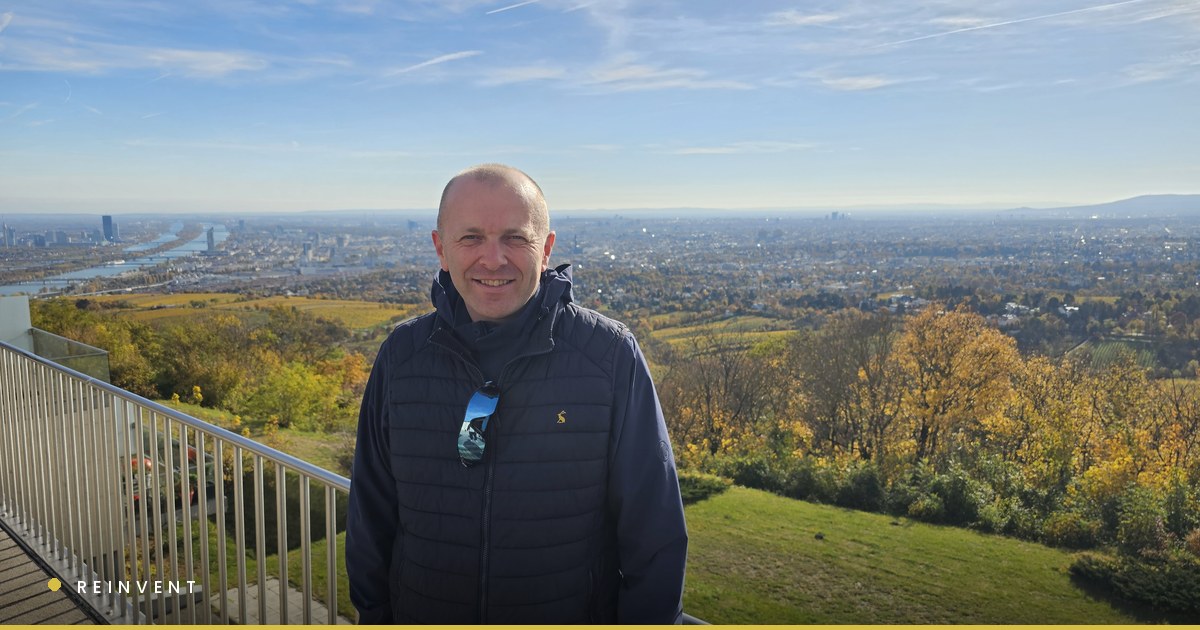
"Who am I if I leave this job?" is not a career question. It is an identity question, and it is one of the most common things people arrive at Where I'm At carrying. When your sense of who you are has been built on what you do, burnout does not only take your energy. It takes the structure that was telling you who you were, and it does it at the exact moment you have the least capacity to rebuild anything.
That is worth saying plainly, because most people meet this question and assume it means something is wrong with them.
The question underneath the question
People rarely arrive at this directly. It usually shows up dressed as something practical: what do I put on my CV, should I stay another year, is it too late to move sideways. Reasonable questions. But if you sit with any of them long enough, they tend to open onto the same one.
Not "what work do I do next." Something closer to "who am I when I am not the person that job needed me to be."
The practical version feels manageable, so that is the one people ask out loud. The other one sits underneath, and it does not respond to a spreadsheet or a five year plan. Which is part of why it gets ignored until something forces it up. For a lot of people, burnout is that something.
Why working professionals are more exposed to this than most
This is not evenly distributed, and the pattern has a shape worth knowing.
According to the Pew Research Center (2023), which surveyed 5,188 workers, 39% say their job or career is extremely or very important to their overall identity. The interesting part is who those people are. Among workers with a postgraduate degree the figure is 53%. Among workers with some college or less, it is 34%. Higher earners sit at 47%.
Pew also found that identity centrality does not vary significantly by gender, race or age. So this is not a generational thing, and it is not a personality flaw. It tracks how much of yourself the work asked for, and professional work asks for a lot.
Which means that if your job has been the organising fact of your adult life, you are not unusually fragile. You are in the more exposed half of your own group, and you were in it long before you burned out.
That reframe matters. The identity question is not evidence you got something wrong. It is what happens when a structure carrying a lot of weight stops carrying it.
The thing that made you good at it is the thing that made it hard to stop
There is a second layer to this, and it is less comfortable.
A 2025 review by Geidelina-Lugovska and Cekuls at the University of Latvia, drawing on 147 studies, found that identifying strongly with your organisation builds commitment, but "can also foster workaholic tendencies characterised by excessive work involvement." Their conclusion is that the risk sits mostly in the conditions around the work: job demands, autonomy, social support, culture.
Read that slowly, because it says two things at once. The identification was not a defect. It is what made you reliable, and invested, and the person things got handed to. It also removed most of your reasons to stop, and if the conditions around you were demanding enough, nothing else was going to.
In my case it was attention to detail, commitment, and getting shit done. A delivery machine with a protestant work ethic, and I would have said that with a straight face and some pride.
There was a shadow side I can see more clearly now. Being the one who delivered meant quietly sorting people into those doing the actual work and those dancing around it with a slide deck. I had a good deal of contempt for the second group, and at the time it felt like discernment.
It was not. It was the same identification doing two jobs at once. What made me useful also handed me a way of ranking people, and a ranking you are near the top of is not something you give up easily. If the work is what makes you the good one, then stopping is not rest. It is a demotion.
That is not an excuse and it is not a verdict. It just means the story where you simply lacked boundaries is missing about half of what was happening.
None of this tells you what your particular situation means. It only says the ground you are standing on is well documented, and that a lot of people have stood on it.
The gap nobody prepares you for
I have written elsewhere about what happened when I went back to work, including the afternoon I read through old emails I had written before I stopped and did not recognise the person who sent them. I will not retell that here. What I want to pick up is the half-sentence I gave it at the time, because it turned out to be the more important half.
I was relieved, because I did not want to be that person again. I was also frightened, because I had no idea who I was supposed to be instead.
That second part is the gap, and it is the thing nobody warns you about. You can be completely certain you are not going back to the old version of yourself and still have absolutely nothing to put in its place. Both of those are true at the same time, and they do not cancel out.
What makes it harder is the timing. The question arrives at the exact point you have the least capacity to work on it. Burnout takes your energy, your concentration and your tolerance for uncertainty, and then hands you the largest open question of your adult life. If you have ever wondered why you cannot think your way through this one the way you have thought your way through everything else, that is why. You are being asked to do identity work with none of the equipment.
The question does not get answered. It gets smaller.
I want to be honest that I have not resolved this. I am not writing from the far side of it.
What I have noticed, and this is my own observation rather than anything I can point to a study for, is that the question stops being the loudest thing in the room long before it gets answered. It does not resolve so much as it stops needing an answer every day. Other things begin taking up room. The question is still there, but it becomes one of several rather than the whole weather.
I think that happens through accumulation rather than insight. Not a moment of clarity about who you are now, but a slow pile of small evidence: things you did, things you turned down, things that held your attention when nothing was requiring it to be held. None of it feels like an answer at the time. It just gradually leaves less space for the question.
That is a slower and less satisfying account than most of what gets written about reinvention. It is also the one I would have wanted to read.
If this is where you are
There is nothing to decide today. No plan to make, nothing to be ready for.
If you want something to sit with, it is probably not "what should I do next." That question arrives too early and asks for certainty you do not have yet. A quieter one: what parts of who you were at work do you actually want to keep?
Not what you should keep. Not what is marketable. What you would want with you regardless of what job you end up doing. Some of it will be worth carrying. Some of it belonged to the role and can stay there. Working out which is which takes a while, and it does not need anyone's permission.
If you want something more structured to work with, I talked to Dr Ben Searle, an organisational psychologist who researched burnout for twenty years and then went through it himself, about how your values and strengths help you answer that. That one is the practical half of this.
Where I'm At is based on lived experience, reflection, and educational support. It is not therapy, counselling, crisis support, or professional advice. Please consult a qualified professional for individual medical, psychological, legal, financial, employment, or specialist support where relevant.
The REINVENT phase in Where I'm At Community is for exactly this point, where the job question and the identity question have turned into the same question. It is currently free to join, and you are welcome to read for as long as you like before saying anything at all.
Sources
- Pew Research Center (2023). How Americans View Their Jobs. https://www.pewresearch.org/social-trends/2023/03/30/how-americans-view-their-jobs/
- Geidelina-Lugovska, M. & Cekuls, A. (2025). Insights into the Nexus of Organizational Identification, Workaholism, and Burnout: Qualitative Study. Springer. https://link.springer.com/chapter/10.1007/978-3-031-80256-0_8